
Blog · Dental Hiring
The Dental Staffing Shortage in 2026: What Practice Owners Need to Know
If your last search for a hygienist or associate dentist took months and still came up short, you are not doing it wrong. The pipeline of dental talent has been shrinking for years, and 2026 is the year the gap is hardest to ignore.
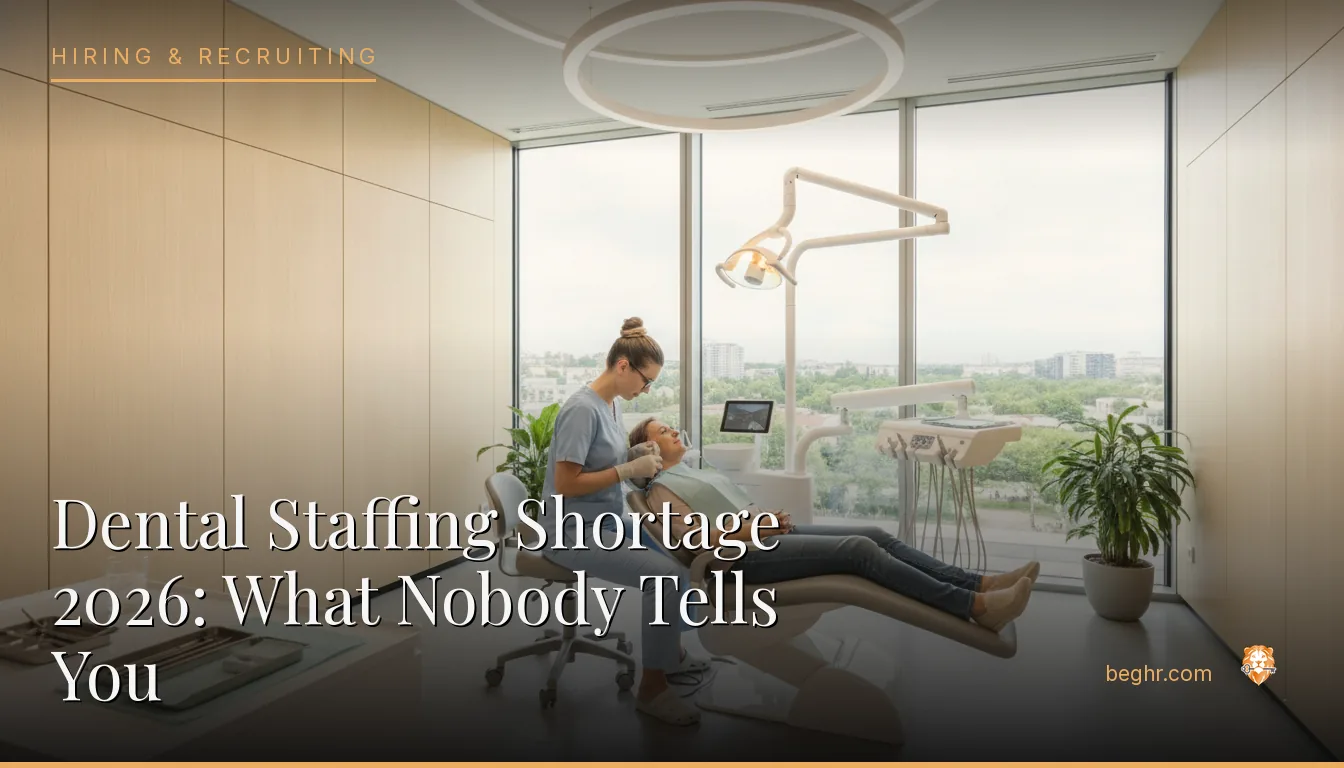
An open hygiene column means lost production every single day it stays empty. A vacant associate seat means longer patient waits and a doctor stretched thin. And in 2026, those roles are staying open longer than ever, because the supply of dental professionals has not kept pace with demand. This is not a slow season. It is a structural shortage, and understanding it is the first step to hiring through it.
The Forces Behind the Shortage
Three trends have collided to create the current gap, and each makes the others worse:
- Professionals left and did not return. Many hygienists and assistants exited the field during and after the pandemic, and a meaningful share never came back.
- The pipeline is constrained. Hygiene and assisting programs have limited capacity and have not produced enough graduates to backfill the losses or meet growth.
- Demand keeps rising. An aging population and steady patient volume keep the need for clinicians high, while group practices and DSOs compete for the same finite pool.
The practical effect for practice owners is simple and expensive: roles take longer to fill, compensation is climbing, and the candidates who are genuinely strong are rarely the ones answering a job posting.
Why the Best Candidates Are Not on Job Boards
In a tight market, the hygienists, associates, and practice managers you most want to hire are the ones already doing the job well at another practice. They are employed, busy, and not scrolling job boards between patients. They will consider a move for the right opportunity, but only if someone brings it to them directly. They are passive candidates, and they make up the larger and stronger half of the market.
A job posting reaches the active half: people in transition, recently relocated, or already searching. That pool has good people in it, but it is shallow in a shortage, and it is the same pool every other practice in your area is fishing. Reaching the passive half requires a fundamentally different method.
What an Open Dental Role Costs
A vacant dental role is not free to leave open. An empty hygiene column is direct lost production and deferred recare. A missing associate means the owner-doctor absorbs the overflow or turns patients away, and a vacant practice manager seat lets billing, scheduling, and team issues pile up. Your remaining staff absorbs the overflow, which raises burnout and turnover risk precisely when you can least afford to lose anyone. The cost of the vacancy compounds every week.
How long has your dental role been open?
If it has been more than 30 days, the shortage is working against you. We will show you what our passive dental pipeline looks like for your specific role right now.
How to Hire Through the Shortage
The practices still filling roles quickly in a tight market do three things differently:
- They source passive candidates directly instead of waiting for applicants, reaching employed clinicians who match the role.
- They move fast once a strong candidate appears, because passive candidates have a short decision window and several options.
- They lead with more than money, since pay alone rarely pulls someone out of a stable role. Schedule, culture, and growth matter as much as the number.
This is the model BEG uses to fill dental roles through isolved Job Placement Services. The pipeline reaches passive candidates the job boards miss, the average fill time is 23-35 days, and the fill rate is 86%. Fees run roughly 50% less than standard contingency, there is no upfront retainer, and every placement carries a 45-day replacement guarantee. BEG places permanent, direct hire professionals only, not temporary staff.
Fill your dental role in 23-35 days
Pick the role, answer a few quick questions, and see your placement quote on screen in 90 seconds.
FAQ: The 2026 Dental Shortage
How bad is the dental staffing shortage in 2026?
It is one of the tightest labor markets in healthcare. Many dental professionals left the field during and after the pandemic and did not return, hygiene and assisting programs have not produced enough graduates to backfill, and demand for care keeps rising as the population ages. Practices report open hygiene and associate roles staying vacant for months, lost production, and longer patient wait times.
Why is it so hard to hire dental staff right now?
Several forces compound. A meaningful share of hygienists and assistants exited the profession and have not come back. Educational pipelines are constrained by limited program capacity. And the rise of group practices and DSOs has intensified competition for the same finite pool of clinicians. Fewer available professionals plus rising demand equals longer searches and higher pay.
How do you hire dental staff when there is a shortage?
You stop relying on job postings, because the strongest candidates in a tight market are passive. They are employed at another practice and not browsing job boards. Reaching them takes direct, targeted outreach to clinicians who match the role, plus a hiring process fast enough to close them before another practice does. That is the model BEG uses to fill dental roles in 23 to 35 days.
Is BEG a staffing agency for dental practices?
No. BEG places permanent, direct hire dental professionals only. It is not a staffing agency and does not provide temporary or per diem staff. BEG fills roles on a milestone-based model through isolved Job Placement Services, with an 86 percent fill rate and a 45-day replacement guarantee.
Related Resources
Anthony leads dental and healthcare placement at Business Executive Group. BEG fills associate dentist, hygienist, and practice management roles through isolved Job Placement Services, a milestone-based model with an 86% fill rate, 23-35 day time-to-fill, and a 45-day replacement guarantee.
From the blog