
Blog · Healthcare Hiring
Clinical Staff Recruiting: Filling Roles a Posting Cannot
If your clinical reqs sit open for months and the applicants who do appear are not the ones you want, the problem is not your job description. It is the channel. The clinicians you most want to hire are not reading postings, and reaching them takes a different method.
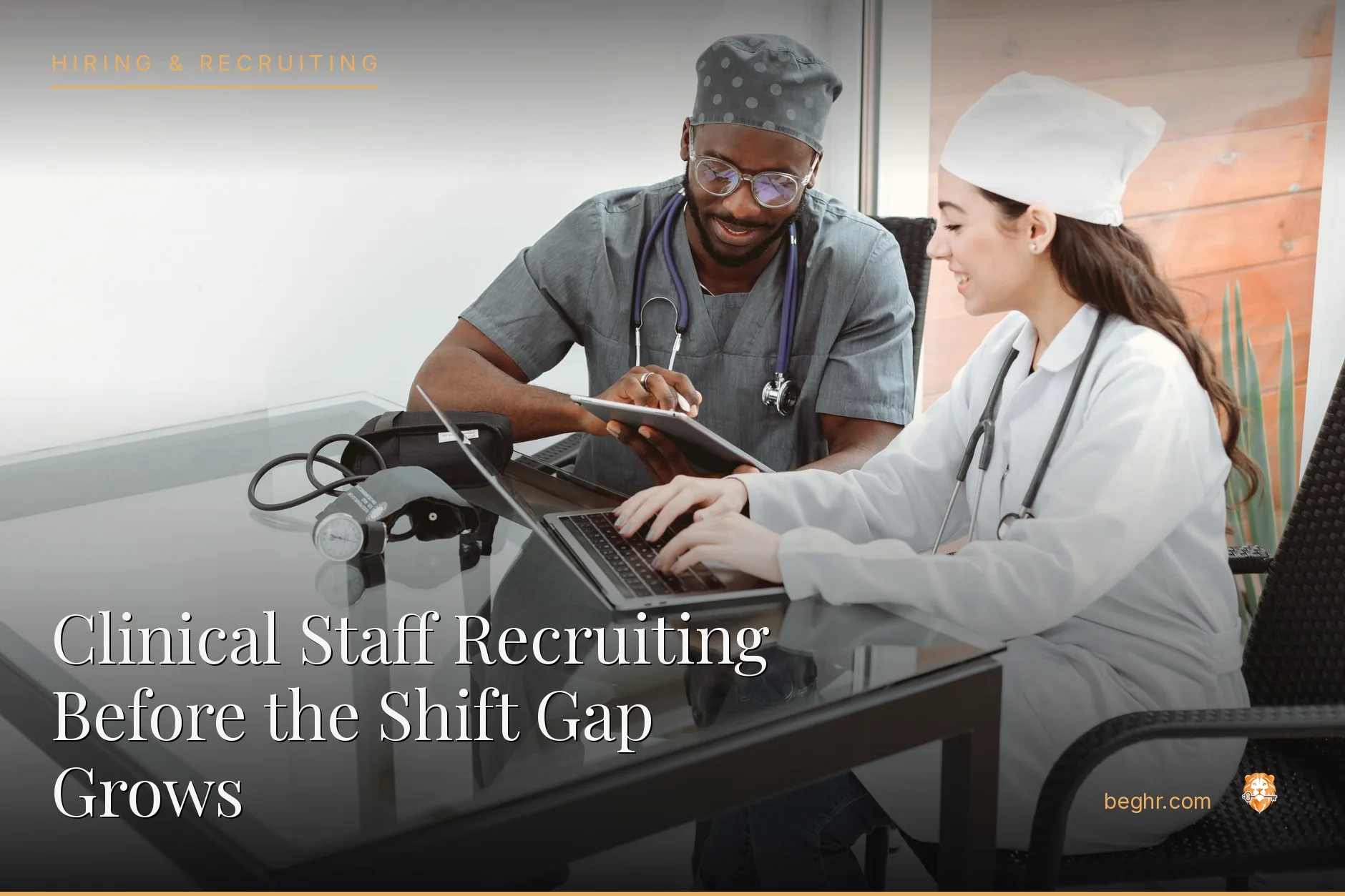
Clinical staff recruiting in 2026 is fundamentally a sourcing problem, not an advertising problem. There is no shortage of ways to broadcast an opening. There is a shortage of qualified clinicians willing to respond to one. The organizations filling roles fast have stopped waiting for the right applicant to find them and have built a way to reach the right clinician directly.
Active Versus Passive Clinical Candidates
Every clinical labor market splits into two groups. Active candidates are searching now: in transition, recently let go, or already unhappy and applying. Passive candidates are employed, performing well, and not looking, though they would consider the right move. In a shortage, the passive group is both larger and stronger, and it is the group a posting never reaches. This is the same dynamic driving the broader healthcare talent shortage, and it is why posting-and-waiting fails.
What Effective Clinical Sourcing Looks Like
Reaching passive clinicians is a craft, not a broadcast. Done well, it includes:
- Precise targeting. Identify clinicians whose specialty, setting, and experience genuinely match the role, not a wide net.
- Individual outreach. Contact each one personally with a specific, credible reason the role may fit their career, not a mass message.
- A respectful, efficient process. Busy clinicians disengage from slow or disorganized hiring fast. Speed and clarity are part of the pitch.
- An honest value story. Schedule, autonomy, panel size, and culture often matter more than pay, so surface them early.
Why Speed Is Part of the Strategy
A strong passive clinician who agrees to explore a move is in play for a short window, often two to four weeks, before momentum fades or a competing offer arrives. Recruiting that sources well but moves slowly still loses candidates. The cadence that works pairs direct sourcing with a process tuned to close quickly: prompt screening, a short and qualified slate, and decisive interviews. The same pattern applies to hiring nurse practitioners and the rest of your clinical roster.
Tired of postings that draw the wrong clinicians?
We will show you what direct sourcing of passive clinical candidates looks like for your specific roles and market right now.
How BEG Recruits Clinical Staff
BEG recruits clinical staff on a milestone-based model through isolved Job Placement Services. The differences are what make it work in a tight market:
- Passive candidate access. The pipeline reaches employed nurses, NPs, and clinical leaders who never see a posting.
- 23-35 day average fill time, 86% fill rate. A continuous pipeline, not a reactive one.
- Roughly 50% less than contingency. The isolved platform reduces the sourcing overhead traditional recruiters price in.
- 45-day replacement guarantee. If a placed clinician leaves within 45 days, BEG fills the role again at no additional fee.
- Permanent, direct hire only. BEG is not a staffing agency and does not place travel or contract clinicians.
You can see role-level detail on the registered nurse placement page, and pay strategy in our healthcare salary trends piece.
Fill your clinical roles in 23-35 days
Pick the role, answer a few quick questions, and see your placement quote on screen in 90 seconds.
FAQ: Clinical Staff Recruiting
What is the best way to recruit clinical staff in 2026?
Direct sourcing of passive candidates. In a tight clinical market, the strongest nurses, advanced practice providers, and clinical leaders are already employed and not applying to postings. Reaching them takes individual, targeted outreach to people who match the role, paired with a process fast enough to close them before a competing offer lands.
Why do job postings underperform for clinical roles?
A posting only reaches the active job seekers: people in transition or already dissatisfied. In a shortage that pool is shallow and heavily contested. The larger and stronger half of the clinical market is passive, and a posting never reaches them. That is why posting-heavy recruiting produces long searches and thin slates.
How do you recruit clinicians without a large internal team?
You partner with a placement model built for passive sourcing. Rather than expanding internal recruiters, a milestone-based partner runs the outreach, screening, and offer support, then hands you a short slate of qualified, interested clinicians. BEG fills clinical roles this way in 23 to 35 days through isolved Job Placement Services.
Is BEG a healthcare staffing agency?
No. BEG places permanent, direct hire clinical professionals only. It is not a staffing agency and does not provide travel, per diem, or contract staff. BEG uses a milestone-based model through isolved Job Placement Services, with an 86 percent fill rate and a 45-day replacement guarantee.
Related Resources
Anthony leads healthcare and clinical placement at Business Executive Group. BEG fills nurse, nurse practitioner, and clinical leadership roles through isolved Job Placement Services, a milestone-based model with an 86% fill rate, 23-35 day time-to-fill, and a 45-day replacement guarantee.
From the blog