
Blog · Technology Hiring
Technology Interview Questions That Reveal Engineering Depth and Delivery Track Record
LeetCode scores measure one thing. Whether an engineer has shipped reliable software at scale, led a team through a production incident, or made defensible architectural decisions under pressure is what the job actually requires.
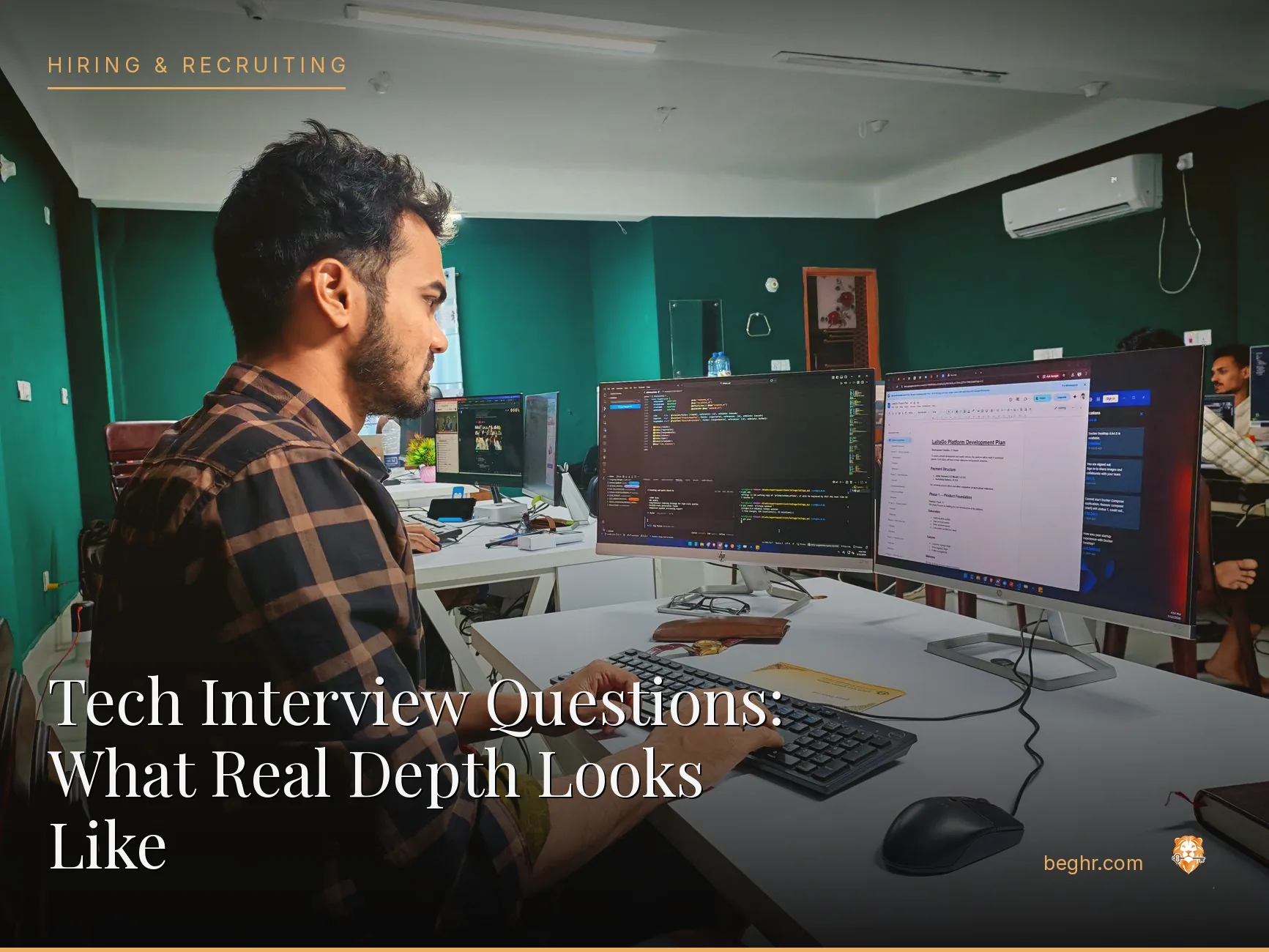
Technology hiring processes often over-index on algorithmic problem-solving and under-index on system design judgment, reliability engineering, and cross-functional communication. The result is engineers who perform well in interviews and struggle in production. These questions are designed to surface the experience and judgment that predict success in a real software engineering environment.
Questions for Software Engineers and Senior Developers
Ask candidates to describe the most complex technical problem they have debugged in production and walk through how they identified the root cause. Ask how they approach a code review where they disagree with a senior engineer's architectural decision. Ask what the most significant system they have designed looked like and what the trade-offs they made were. Engineers who have operated in complex production environments will have detailed, honest answers, including what went wrong.
Questions for Engineering Managers and Tech Leads
Ask how they have managed an engineer on their team who was technically strong but creating interpersonal friction. Ask what their approach to technical debt is and how they have allocated sprint capacity between new features and reliability work. Ask how they have handled a production incident at 2am and what their post-incident process looked like. Engineering leaders who have genuinely managed teams through adversity will describe specific situations with specific outcomes.
Questions for System Design and Architecture
Ask candidates to design a simplified version of a system relevant to your product. The question is not whether they get the right answer but whether their trade-off reasoning is sound, whether they think about failure modes, and whether they ask clarifying questions before diving in. Then ask them to describe a production system they have built that had a significant scalability or reliability challenge and how they addressed it.
Filling a software engineer, engineering manager, or DevOps role?
Strong engineers are inside active teams and not responding to job boards. BEG reaches passive technology candidates and fills tech roles in 23-35 days at roughly 50% less than contingency.
Take-Home Exercises: Scope Matters
If your process includes a take-home exercise, scope it to reflect the actual complexity and time commitment of the role. A focused exercise of two to four hours that mirrors real work is appropriate and informative. An open-ended project that requires a weekend of effort tells strong candidates, who have multiple options, that you do not value their time. If you require significant effort, compensate for it. Paid technical exercises are more defensible, signal respect for the candidate's time, and produce better work because the candidate is not rushing.
Fill this role in 23-35 days
Pick the role, answer a few quick questions, and see your placement quote on screen in 90 seconds.
FAQ
What is the most important thing to evaluate in a software engineering interview?
System design judgment and production reliability experience. Algorithmic ability is a baseline. The question is whether the engineer has actually shipped and maintained a system under real load and real failure conditions. Ask for specific production incidents they have managed.
Should I use LeetCode-style problems in a technology interview?
Sparingly, and only if they map to the actual job. For competitive algorithm roles or platform-scale engineering, they are relevant. For most product engineering roles, a system design discussion and a focused coding exercise that reflects real work is more predictive of job performance.
How do I evaluate an engineering manager's technical credibility?
Ask them to participate in a technical design discussion with your senior engineers. Observe whether they can follow the reasoning, ask useful questions, and add signal to the conversation. Technical managers who have drifted fully into process mode will be passive in a technical conversation. Those who remain technical will be active and useful.
Anthony leads technology placement at BEG. BEG fills software engineer, engineering manager, DevOps engineer, and data scientist roles through isolved Job Placement Services on a milestone model with an 86% fill rate and a 45-day replacement guarantee.
From the blog