
Blog · Veterinary Hiring
Veterinary Salary Trends 2026: Why Pay Alone Does Not Win Candidates
Veterinary compensation has climbed for years, and it is still climbing. But the practices that win the best DVMs in 2026 are not always the ones writing the biggest checks. Here is what the numbers are doing and what actually closes a hire.
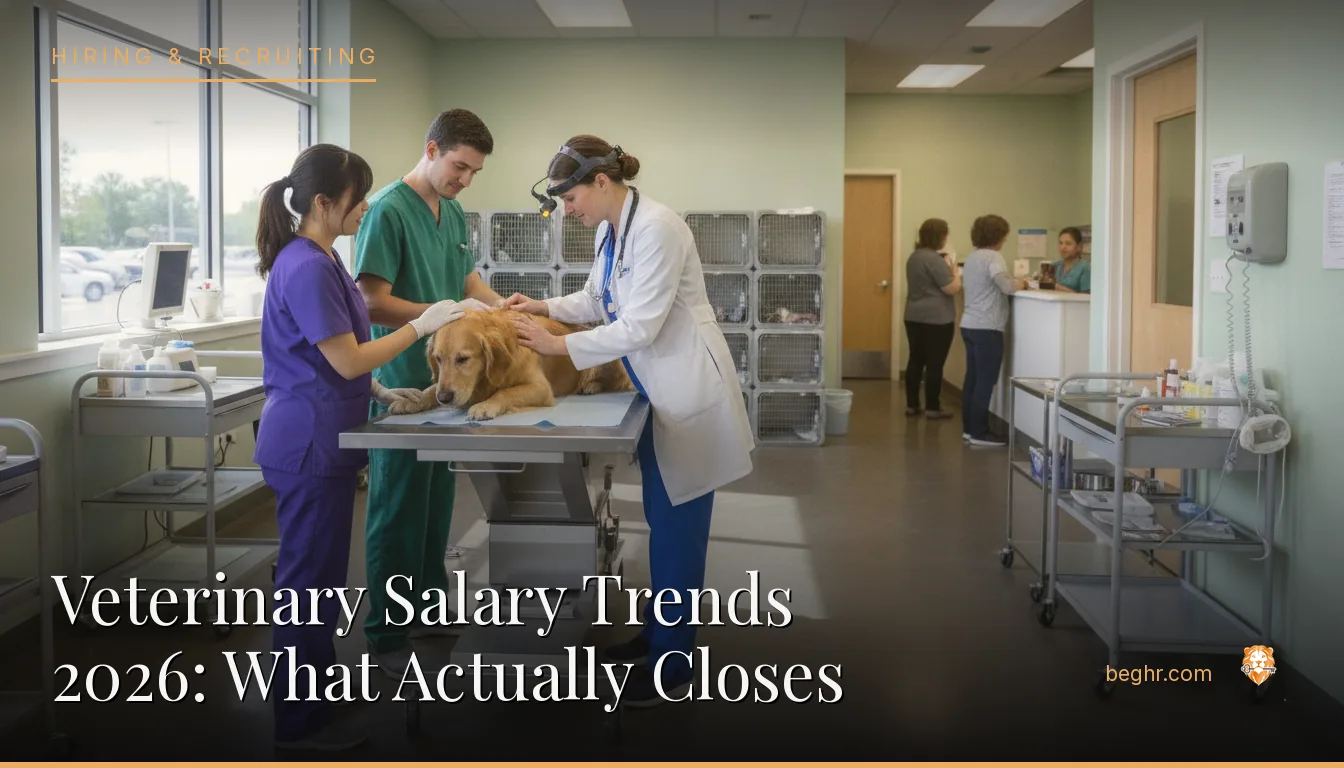
If you have priced a veterinary hire recently, you already know compensation is up. The structural shortage of veterinarians has pushed base pay, production percentages, and sign-on bonuses higher across nearly every market. But many practices that meet or beat market pay still lose their top candidate, and understanding why is the key to hiring well in 2026.
What Is Driving Veterinary Pay Up
Three forces keep compensation climbing, and none of them are reversing soon:
- The shortage itself. Demand for veterinary care has outrun the supply of licensed DVMs for years, and a thin pool means practices bid up pay to compete.
- Corporate consolidation. Larger groups entering local markets often raise the going rate for associates and managers, pulling the whole market up with them.
- Student debt and expectations. New graduates carry significant debt and expect compensation that reflects it, which raises the floor for entry-level offers.
The result is a market where pay alone is rarely a differentiator. When most serious offers are competitive, the deciding factors move elsewhere.
Why Pay Alone Does Not Close the Hire
The veterinarians you most want to hire are passive: already employed, already paid reasonably, and not desperate to move. A modestly higher number does not pull someone out of a stable, comfortable situation. What does move them is the whole picture: a manageable schedule, mentorship and growth, modern equipment, the kind of medicine they want to practice, and a culture that does not burn people out. Practices that lead with those advantages win candidates the highest bidder loses.
Not sure your offer is competitive?
We see what candidates accept and decline across markets every week. We will tell you how your role stacks up and what is actually closing veterinary hires right now.
How to Compete Without Overpaying
Winning strong veterinarians in a high-pay market comes down to three moves:
- Be clearly competitive, not necessarily the highest. Land in the right band for your market and caseload so pay never becomes the reason you lose.
- Sell the whole role. Make the schedule, mentorship, medicine, and culture concrete and credible, not vague promises.
- Reach passive candidates and move fast. The best DVMs are not applying. Direct outreach plus a quick, decisive process closes them before a competitor does.
This is the model BEG uses to fill veterinary roles through isolved Job Placement Services. The pipeline reaches passive candidates the job boards miss, the average fill time is 23-35 days, and the fill rate is 86%. Fees run roughly 50% less than standard contingency, there is no upfront retainer, and every placement carries a 45-day replacement guarantee. BEG places permanent, direct hire professionals only, not relief or temporary staff.
Fill your veterinary role in 23-35 days
Pick the role, answer a few quick questions, and see your placement quote on screen in 90 seconds.
FAQ: Veterinary Salary Trends
Are veterinary salaries going up in 2026?
Yes. The structural shortage of veterinarians keeps upward pressure on compensation across DVM, technician, and management roles. Practices competing for a thin pool of candidates have steadily raised base pay, production percentages, sign-on bonuses, and benefits. The trend is consistent across most markets, though the exact numbers vary widely by region, species mix, and experience.
How much do I need to pay to hire a veterinarian?
Enough to be clearly competitive for your market and caseload, but a precise number depends on geography, species, experience, and production model. The more useful question is whether your total offer, including schedule, mentorship, equipment, and culture, is competitive. A strong non-cash package lets you win candidates without simply being the highest bidder.
Why does paying more not solve the hiring problem?
Because the strongest veterinarians are passive. They are already employed and reasonably paid, so a slightly higher number rarely pulls them out of a stable job. What moves them is a better overall situation: a saner schedule, real mentorship, the kind of medicine they want to practice, and a culture that respects boundaries. Pay gets you in the conversation, but it rarely closes the hire by itself.
Is BEG a staffing agency?
No. BEG places permanent, direct hire veterinary professionals only. It is not a staffing agency and does not provide relief or contract vets. BEG uses a milestone-based model through isolved Job Placement Services, with an 86 percent fill rate, fees roughly 50 percent less than contingency, and a 45-day replacement guarantee.
Related Resources
Anthony leads veterinary placement at Business Executive Group. BEG fills associate veterinarian, hospital director, and practice manager roles through isolved Job Placement Services, a milestone-based model with an 86% fill rate, 23-35 day time-to-fill, and a 45-day replacement guarantee.
From the blog